
How to Keep Your Dog Mentally Stimulated and Active
Keeping your dog mentally stimulated is just as important as physical exercise. Dogs that get regular mental challenges are calmer, easier to train, and less likely to develop destructive behaviors.
This guide gives practical, reliable strategies you can use every day—quick games, equipment suggestions, and routines that fit different ages and energy levels.
Why mental stimulation matters
Mental exercise helps dogs use natural problem-solving skills, reduces boredom-driven behaviors like chewing and excessive barking, and supports overall well-being. Think of mental activity as the canine equivalent of a human crossword: short, regular sessions add up.
Daily routine: predictable exercise plus surprise enrichment
Your daily routine should mix predictable structure (walks, meals, rest) with unpredictable enrichment (new smells, short games). Start with a consistent schedule—walks and meals at similar times—then add 10–20 minute enrichment sessions so your dog has things to look forward to.
For walks, use a sturdy leash that gives you control and confidence so you can focus on training and enrichment rather than equipment. A reliable option is the Fida 4 ft heavy duty leash, which is helpful for varied walking drills and scent walks.
Interactive toys and puzzle feeders
Interactive toys give dogs tasks: flip, slide, nudge, or solve to earn a reward. They work well for short training sessions and solo play. Stock a selection of toys that vary in difficulty and refillability so your dog doesn’t master everything at once.
Consider investing in purpose-built options like dog interactive toys and specific puzzle models such as PETSTA dog puzzle toys. Use high-value treats when introducing a new puzzle and gradually reduce food rewards as the toy becomes familiar.
Chewing and oral enrichment
Chewing is a natural canine behavior that satisfies both physical and mental needs. Offer durable, safe chew options and rotate them to keep interest high. Supervise new chews to ensure safety and remove any damaged pieces promptly.
For long-lasting entertainment, try variety: rubber chews for tougher chewers, softer chews for anxious or older dogs, and creative toys that combine chewing with food-dispensing. Browse options in our dog chew toys category and consider interactive chew-friendly designs like the WOOF Pupsicle for extended play sessions.
Use feeding time for enrichment
Turn meals into mental workouts. Replace a bowl with puzzle feeders, scatter kibble for sniffing games, or hide small portions around the home for a short foraging session. Feeding-based enrichment slows down fast eaters and engages scent and problem-solving skills.
If you prefer automated scheduling for predictability or to support training, consider automatic feeders. Timed feeders are also useful when you want short, frequent reinforcement for behaviors during the day.
Training games that challenge the brain
Short training sessions—5 to 10 minutes, two to four times daily—work wonders. Teach simple cues (sit, place, leave it) then layer in problem-solving tasks: open/close a low box, retrieve named toys, or do a short scent discrimination. Reward success quickly and keep difficulty just above current skill to maintain interest.
Use training to redirect high energy into useful tasks. For example, teach a “place” cue to have your dog settle on a mat or bed after active play; pairing this with an orthopedic dog bed helps create a comfortable, predictable rest spot.
Structured play: scent work, hide-and-seek, and tug
Structured play provides both exercise and cognitive load. Scent work is low-impact and highly engaging: hide treats or a favorite toy in boxes or under cups and have your dog find them. Hide-and-seek strengthens recall and builds excitement for coming when called.
Tug and fetch are great for active dogs; alternate high-energy games with mental tasks so your dog practices switching states (active to calm), which is a useful life skill.
Safe spaces, rest, and crate training
A well-managed rest area gives dogs an opportunity to process activity and recharge. Crates can serve as a calm den, provided they’re introduced positively. Keep the crate inviting with bedding and the occasional chews or puzzle, and avoid using it as punishment.
Choose a reliable dog crate that fits your dog’s size and a comfortable bed like the orthopedic dog bed for older or joint-sensitive dogs.
Rotation, novelty, and tailoring to age/ability
Rotate toys to prevent boredom: put some away for a week, then reintroduce them. For puppies, focus on short learning bursts and safe teething chews. For seniors, prioritize scent work, gentle interactive puzzles, and comfortable rest. Tailor difficulty and session length to your dog’s energy and health.
Simple checklist
- Schedule: 2–3 short enrichment sessions daily (10–20 minutes total)
- Variety: rotate toys, puzzles, and chew items weekly
- Walks: include scent-focused and training walks using a reliable Fida 4 ft heavy duty leash
- Feeding: use puzzle feeders or automatic feeders for timed enrichment
- Rest: provide a crate and bed suited to your dog’s size and needs (dog crate, orthopedic dog bed)
FAQ
Q: How long should mental exercise sessions be?
A: Short and frequent is best: 5–15 minutes, two to four times daily depending on your dog’s age and energy.
Q: What if my dog gets frustrated with a puzzle?
A: Simplify the puzzle, use higher-value rewards, and give frequent success so frustration doesn’t build. End on a positive note.
Q: Can older dogs still benefit?
A: Absolutely. Modify tasks for mobility—scent work, low-motion puzzles, and gentle training provide cognitive stimulation without strain.
Q: Are chew toys enough for mental stimulation?
A: Chews help, but variety is important. Combine chew time with puzzles, scent games, and training for a balanced enrichment plan.
Q: How do I introduce a crate without stress?
A: Make it a positive space—feed meals in the crate, add a cozy bed, and use short, calm sessions that gradually increase duration.
Conclusion
Consistent, varied mental stimulation keeps dogs happier and healthier. Combine walks, interactive toys, chew options, feeding enrichment, and short training games. Small daily investments—ten minutes here, a puzzle there—pay off with a calmer, more engaged companion.
Products Featured in This Article
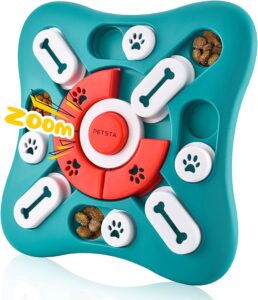
PETSTA Dog Puzzle Toys, Treat Dispe…
Product description The video showcases the product in use.The video guides you through product setup.The video…

WOOF Pupsicle – Long-Lasting …
Product description The video showcases the product in use.The video guides you through product setup.The video…

Bedsure Orthopedic Dog Beds Large S…
Product description Bedsure’s original dog bed construction delivers orthopedic support. The video showcases the product in…

FDW Extra Large Dog Crate Dog Kenne…
This dog cage dog crate is a warm haven that your pet will adore, not simply…

Fida 4 FT Heavy Duty Dog Leash with…
Product description The video showcases the product in use.The video guides you through product setup.The video…