
A Beginner’s Guide to Positive Dog Training at Home
Positive dog training is an effective, humane approach that builds trust and encourages reliable behavior using rewards rather than punishment. Whether you have a puppy or an adult dog, learning a straightforward, consistent method at home will set the foundation for good behavior and a stronger bond.
This guide breaks down what you need to start, step-by-step exercises to teach common cues, how to manage problem behaviors, and practical tools that make training easier. Read on for easy-to-follow routines, a simple checklist, and answers to common questions.
What is positive reinforcement training?
Positive reinforcement means rewarding a dog for desired behavior so the dog learns to repeat it. Rewards can be food, toys, praise, or play. The key elements are timing (rewards must follow the behavior immediately), consistency, and gradually increasing expectations as the dog improves.
Getting started: basic setup and supplies
Create a calm training space free from distractions. Keep high-value treats in small, easy-to-access portions, and have a clicker or a consistent verbal marker like “Yes!” ready to mark the exact moment your dog does the desired behavior.
Feeding routines and scheduled practice help training progress. Use an appropriately sized feeder so mealtimes are predictable and useful as training opportunities: Dog Food and Water Bowls.
Basic cues to teach at home
Start with four foundational cues: Sit, Down, Come, and Stay. Keep sessions short (5–10 minutes), frequent (2–4 times daily), and end on a success. Break each cue into tiny steps and reward the smallest approximation early on.
For safe, controlled practice outdoors and on walks, a sturdy leash helps guide and reinforce good choices: Fida 4 FT Heavy Duty Dog Leash with…. Pair that with a comfortable collar for everyday management: Didog Soft PU Leather Dog Collars f….
Crate training and house manners
Crate training gives dogs a safe den and is a reliable tool for house-training when used positively. Introduce the crate slowly: toss treats just inside the door, praise moving in, then gradually increase time with the door closed.
Choose a crate sized so the dog can stand, turn, and lie down comfortably and use it for naps and overnight rest, not punishment. If you need a sturdy option for crate training and secure containment, consider: Dog Crates and Kennels.
Managing chewing, boredom, and energy
Chewing and attention-seeking often come from boredom or teething. Provide safe outlets and rotate toys to keep interest high. Durable chew items and puzzle toys reduce destructive behavior and teach problem-solving.
For supervised enrichment that encourages independent play and calm focus, look at interactive options: Dog Interactive Toys. For focused chewing and teething relief, use appropriate options from: Dog Chew Toys.
Using food and toys strategically
Mix food and toys as rewards to keep reinforcement varied. For mental stimulation during training and down-times, treat-dispensing puzzles add value. Puzzle toys are especially helpful when shaping longer-duration behaviors—dogs learn to work for their reward rather than grabbing it instantly: PETSTA Dog Puzzle Toys, Treat Dispe….
Scheduling training and rest
Consistency wins. Build a daily routine that includes short focused sessions, walks, structured play, and scheduled rest. After a productive session, allow the dog a quiet, comfy place to relax—rest supports learning consolidation: Dog Beds.
Progression, mistakes, and troubleshooting
If progress stalls, reduce criteria and reward smaller steps again. Avoid punishment—it can make dogs avoid you or become anxious. Instead, manage the environment so mistakes are less likely (e.g., crate when you can’t supervise) and set the dog up to succeed.
If a behavior is getting worse in real life (aggression, fear, severe anxiety), stop and consult a qualified trainer or behaviorist. For everyday training stalls, revisit timing, reward value, and session length.
Checklist: First 30 days of training
- Designate a quiet training space and remove distractions.
- Gather treats, a marker (clicker or word), a comfortable collar, and a short leash.
- Teach Sit, Down, Come, and Stay using 3–5 minute micro-sessions, 2–4× per day.
- Crate-train with gradual entry and short closed-door intervals.
- Provide at least one interactive toy or puzzle daily for mental work.
- Rotate chew toys and limit freedom when unsupervised.
- End sessions on a successful, reinforced behavior.
- Track progress in a quick notebook: date, cue, success rate, notes.
FAQ
Q: How long until my dog reliably knows a cue?
A: Varies by dog and cue—many dogs learn a simple cue in days with short, consistent sessions; generalization (reliable in different places and with distractions) can take weeks to months.
Q: What if my dog only works for food?
A: Food is powerful and acceptable as primary reinforcement. Gradually mix in toys, play, and praise so the dog learns multiple motivators. Puzzle toys can bridge food and play: PETSTA Dog Puzzle Toys, Treat Dispe….
Q: When should I use a crate?
A: Use crates for safe confinement when you can’t supervise, for travel, and for teaching calm behavior. Make it positive—never use it for punishment. If you need a crate option, see: Dog Crates and Kennels.
Q: How do I stop destructive chewing?
A: Increase supervised exercise and mental enrichment, rotate chew toys, and provide durable chews. Replace inappropriate items with acceptable alternatives and praise chewing the right items. Check chew toy options here: Dog Chew Toys.
Q: What gear helps with walks and leash training?
A: A reliable leash and a comfortable collar or harness are essential. Use short, consistent walks to practice loose-leash skills and reinforce walking calmly: Fida 4 FT Heavy Duty Dog Leash with… and Didog Soft PU Leather Dog Collars f….
Q: How can I keep training interesting for my dog?
A: Vary rewards, use interactive toys and puzzles for enrichment, and include short bursts of play. Rotating interactive options keeps motivation high: Dog Interactive Toys.
Conclusion
Positive training at home is about consistency, timing, and setting your dog up to succeed. Start small, use short daily sessions, and employ the right tools—treats, toys, a reliable leash and collar, crate, and a comfortable bed—to make learning easy and enjoyable. With patience and clear steps, most pet owners see steady, lasting progress within weeks.
Practical takeaway: commit to a five-minute training ritual three times daily, reinforce anything your dog does right immediately, and rotate one new enrichment toy each week to maintain engagement.
Products Featured in This Article
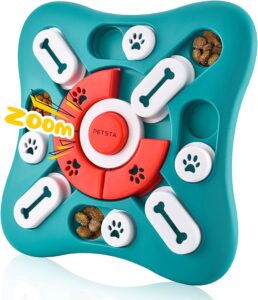
PETSTA Dog Puzzle Toys, Treat Dispe…
Product description The video showcases the product in use.The video guides you through product setup.The video…

Didog Soft PU Leather Dog Collars f…
Product description Didog Soft PU Leather Dog Collar with Quick Release Buckle & Nylon Padded Easy…

Fida 4 FT Heavy Duty Dog Leash with…
Product description The video showcases the product in use.The video guides you through product setup.The video…